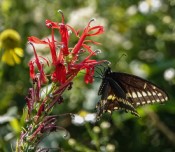
Since 2016, volunteers from FODM and the Audubon Society of Northern Virginia have conducted surveys of butterflies, dragonflies and damselflies in Dyke Marsh from April to October. Here are the total numbers of species documented from 2016 through September 23, 2020: butterflies, 50 species; damselflies, 12 species; dragonflies, 37 species. While surveying, they also document other insects.
News
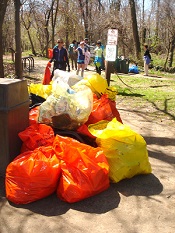
Friends of Dyke Marsh volunteers typically collect 30 bags of trash along the Potomac River shoreline during two-hour cleanups. On September 26, 2020, 17 volunteers filled 42 bags.
One consequence of the coronavirus pandemic in 2020 has been a substantial increase the amount of trash on our streets, parking lots and land, much of which ultimately ends up in our waterways. Observers often find wipes, masks and rubber gloves littered across the landscape. With more people ordering takeout food, there appears to be an increase in food packaging materials as well.
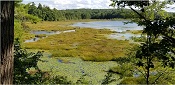
At FODM’s quarterly meeting on September 8, 2020, George Mason University professor Dr. Christian Jones gave a Zoom presentation on wetlands systems of the mid-Atlantic region, their value and threats. Dr. Jones, a freshwater ecologist with GMU’s Potomac Environmental Research and Education Center, explained that wetlands have several valuable functions, including storing water, recharging groundwater, mitigating flooding and buffering shorelines from storms. Wetlands, like peat bogs, store carbon emitted into the air and thus help mitigate climate change.
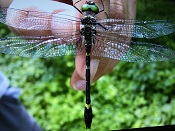
On August 19, 2020, Ed Eder identified a dragonfly species in Dyke Marsh, the Swift River cruiser (Macromia illinoiensis illinoiensis), never before documented in the preserve.
These dragonflies are about three inches long and have bright green eyes and a single yellow thoracic side stripe. They have yellow spots along the length of their abdomens. Males have a slightly clubbed tail.
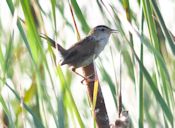
In early August 2020, FODMers observed two or three male marsh wrens (Cistothorus palustris) in Dyke Marsh in what FODMers call “the Big Gut.” It appeared that none of the birds had a mate and since it was so late in the breeding season, the observers believe that it will be unlikely for these birds to attract a mate this year so late in the season.
These volunteers heard the unmistakable bubbly call of the marsh wren and saw several dummy nests but no complete nest. This male likely represents the remnant population of what was once a thriving marsh wren colony and is a reminder of the fragility of the habitat and the loss of significant marsh acreage in the preserve. See “Restoration.”
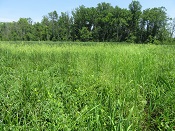
Dyke Marsh is like a “sea of green” in the summer when wetland plants like wild rice (Zizania aquatica) are at their height. Wild rice shimmers in the breeze and can grow to be 10 feet tall. In the second photo, it is in flower or bud. In the third, it is in fruit.